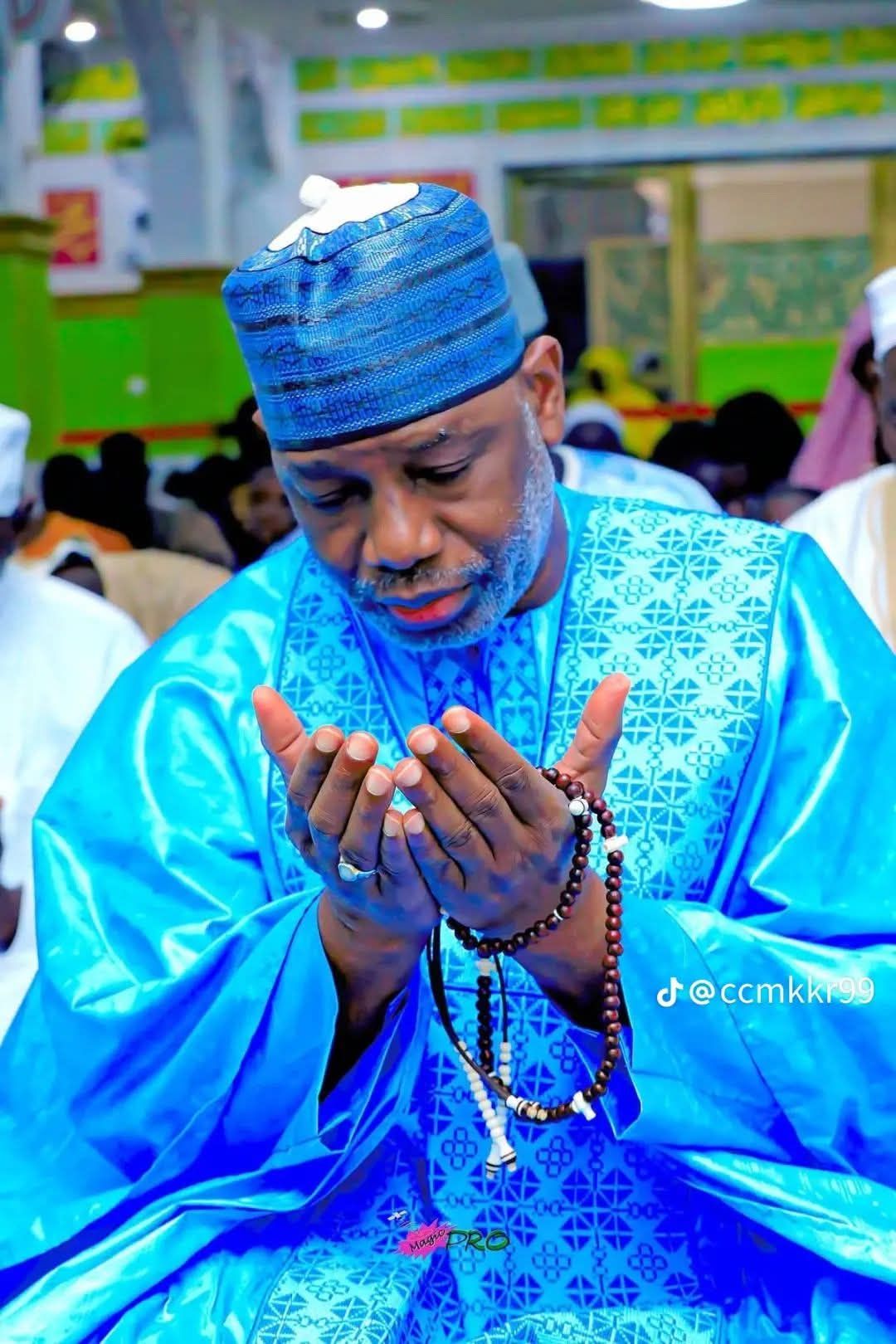
“Transmettre le savoir avec douceur, et accompagner chacun avec patience.”
Cheick Malick Konaté, born on July 14, 1962, in Adjamé (a commune of Abidjan), is one of the Ivorian religious and spiritual leaders who has most successfully blended religion with mysticism. A husband to two wives and a father of six, he is viewed by some as an Imam and by others as a Sufi master; thanks to his humility and integrity, he has gained acceptance across all walks of life. Like a reed that bends but never breaks, Cheick Malick opposes all forms of extremism, favoring reconciliation within the framework of religious rigor. For him, everything is love and everything is beautiful, because God is Love and Beauty... After completing his primary education under Moualim Koumaré, Cheick Malick Konaté pursued the bulk of his secondary studies in theology and Sufism under the guidance of the great Master of the Tijaniyyah Tariqa, El Hadj Ibrahim Sonta—known as Ladji N’guêrê—who served as the chief Imam of the Grand Mosque of Adjamé from 1976 to 1990. It was under this Master that the man who would come to be known as "Khadim Rassoul" received his training in both exoteric and esoteric Islam. As a Grand Master of the Tijaniyyah Tariqa, Cheick Malick teaches and preaches the word of Allah and the teachings of the Prophet Muhammad. His simplicity, eloquence, and humility have captivated many; indeed, throughout the year—and especially during the month of Rabi' al-Awwal (the month of the Prophet Muhammad's birth)—he is frequently called upon to deliver lectures in the morning, afternoon, and even at night. His profound love for the Prophet Muhammad has earned him the nickname "Khadim Rassoul," meaning "Servant of the Messenger." His recognized disciples are estimated at 300 *talibés*, distributed across 13 *zawiyas* (monasteries).
Un second paragraphe peut détailler son engagement actuel : enseignement régulier, accompagnement des familles, participation à la vie communautaire et rayonnement au-delà de sa ville.
- Étape 1
Formation initiale
Apprentissage du Coran et des sciences religieuses de base.
- Étape 2
Spécialisation
Approfondissement auprès de maîtres reconnus dans une ou plusieurs disciplines.
- Étape 3
Enseignement public
Cours, khutbas et conférences ouverts à la communauté.